Welcome to our ESE FAQ. Here, we’ll try to answer the most important questions you might have as a first-year student. If you still have questions, just send us an email or message us on our social media pages.
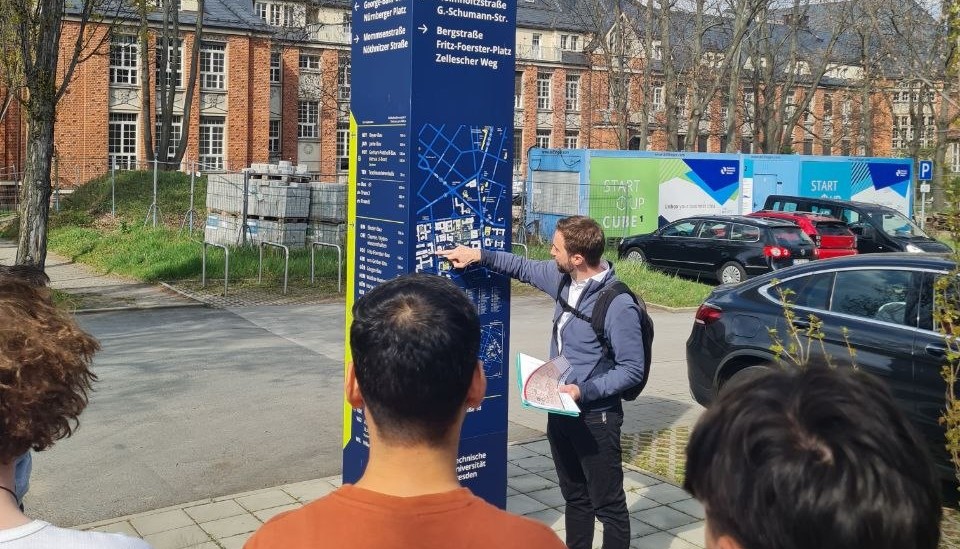
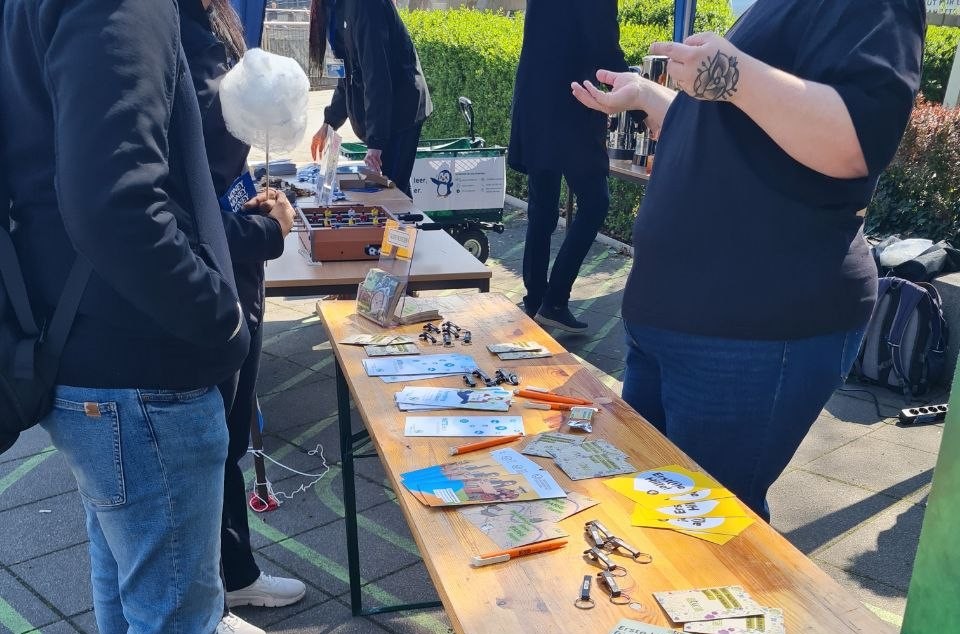
Historical Campus Tour 1Historical Campus Tour 2Pub QuizInformation Booth
ESE stands for “First-Semester Orientation” at TU Dresden. It’s organized almost entirely by students and, in addition to providing important information about starting your studies, offers plenty of opportunities to meet new people.
The Faculty Student Council represents your interests at the level of your degree program. Usually, similar degree programs - for example, all programs within a faculty - form a faculty student body or a Faculty Student Council. The FSR is your first point of contact for any issues related to your studies and helps you get oriented at the university during your first week (first-semester orientation, ESE). It usually offers plenty of useful tips and support - such as past exam collections and counseling services, which you’re welcome to use at any time - as well as intercultural evenings, field trips, and parties.
The FSR is re-elected every year by all students in the student council. You, too, can become part of the FSR. Democracy in action at the university.
The easiest way to find your FSR’s ESE events (and thus your FSR) is on the TU website. There, simply search for your degree program under the “Important dates for the start of your studies” tab. From there, you’ll be redirected to the relevant pages.
Alternatively, you can log in to SELMA.
There, you’ll find your faculty student council affiliation and account in the “Additional Personal Information” section. From there, your favorite search engine is your best friend. Or you can use the StuRa overview page.
Most events during the ESE are optional, so you don’t have to attend. However, there are also some mandatory events. These are marked accordingly in the announcements.
That said, it makes sense to attend as many ESE events as possible, because you’ll have the chance to meet many fellow students there.
Almost all ESE events are free for you. Sometimes you’ll need to pay a small fee, for example, to help cover the cost of food or drinks. You can get more information about this from your FSR.
Most FSRs have put together a bag (or something similar) filled with lots of practical or fun items for you. Your FSR can give you more details.
In collaboration with the city of Dresden (represented by Citymanagement Dresden), TUD is providing a limited number of backpacks as a welcome gift for first-semester students.
Detailed information on how the backpacks will be distributed will be published on the TU Dresden website.
Just like last year, first-year students can apply for a backpack via the website. The backpacks will then be awarded by lottery among the applicants.
You can find out when classes start at TU Dresden in the academic calendar on the TU Dresden website. The student councils usually plan the ESE before classes begin. So you can enjoy your ESE week without any stress.
If you have unpleasant experiences during your ESE, you can always contact your FSR. If you’d rather not do that, you can also reach out to us at the StuRa. You can find out more on the Awareness subpage.
Your FSR may also have other resources for raising awareness.
The Student Council (short for “StuRa”) is the student representative body for all students at TU Dresden. Students serve on the StuRa on a volunteer basis and advocate for all 30,000 students on campus. In addition to the faculty student councils, which are responsible for issues affecting individual degree programs, we are responsible for student participation and shaping campus life.
We try to help you with any problems you may have related to your studies (for example, through our counseling services) and represent students’ views both within the university and beyond.
The TU campus is pretty big, and especially if you’re new here, it’s easy to get lost. The CampusNavigator can help with that (note: it’s not really compatible with cell phones - modern technology and all that). There you’ll find all the university buildings, and the rooms are listed by name as well.
Alternatively, all university buildings are also listed on popular mapping services. Just search for them there. Inside the buildings, the important rooms are usually signposted. Otherwise, the emergency evacuation plan is very useful for finding your way around (except in the Schumann Building, but that’s a maze in its own right anyway).
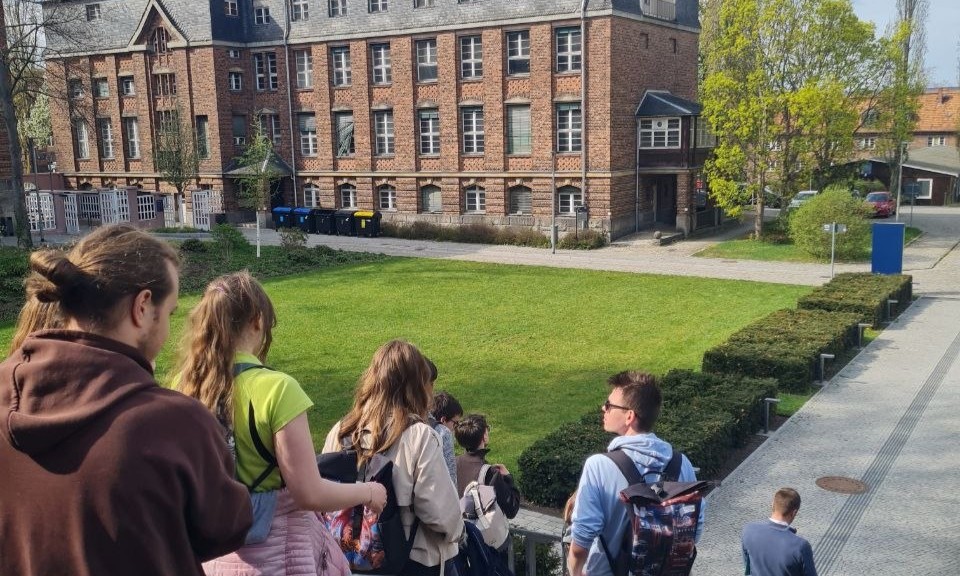 Historical Campus Tour 1